


From Persecution to Reclamation: A History of British Witchcraft
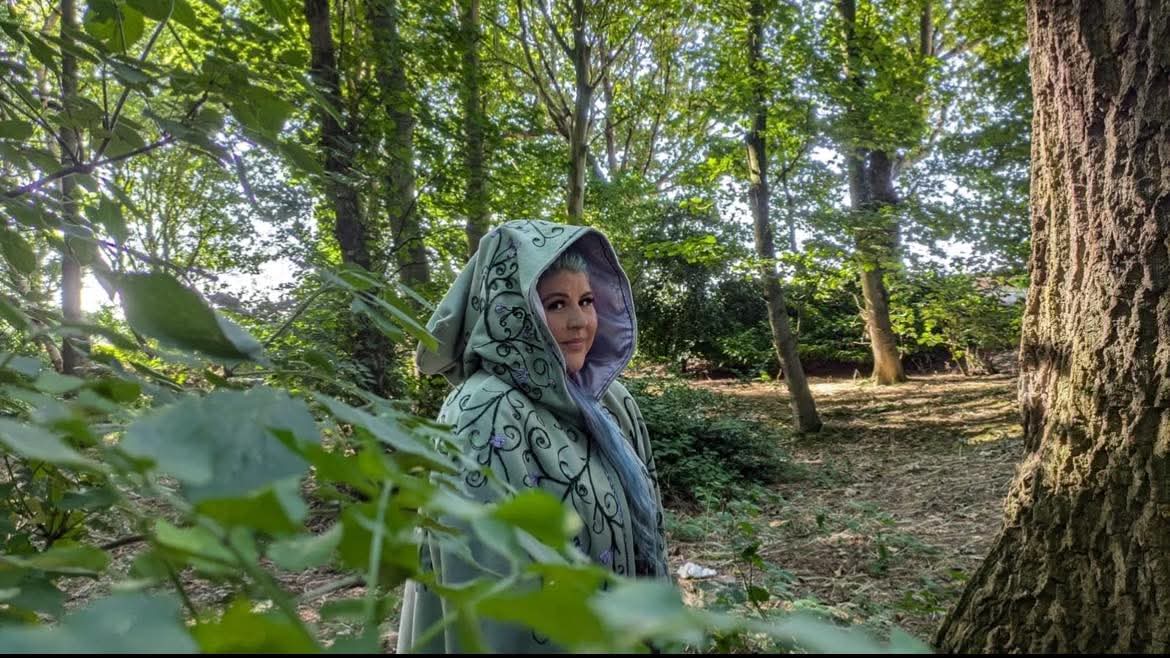
For centuries, the word witch has carried both fear & fascination.
Once used as an accusation that could cost someone their life, it is now increasingly embraced as a path of spiritual connection, personal empowerment & nature based practice. Today, modern witchcraft is experiencing a powerful revival as people reconnect with folklore, seasonal cycles & everyday magic.
But the story of witchcraft is not a simple one. It is a journey that moves from ancient spiritual traditions, through centuries of persecution & into a modern reclamation of identity and practice. Understanding this journey helps us see how contemporary witchcraft, whether practiced through ritual, meditation, or nature connection carries echoes of a much older heritage.
This history matters, not only for those who identify as witches today, not only for anyone interested in spirituality, folklore & the ways traditions evolve over time, but for those persecuted.
The idea of the witch as a servant of evil developed gradually during the late medieval period. By the 15th century, religious & political authorities increasingly began to frame magical practices as dangerous or heretical.
A key turning point came with the publication of the Malleus Maleficarum, written by the inquisitor Heinrich Kramer in 1487. The text argued that witches were agents of the devil & encouraged the systematic identification and prosecution of suspected practitioners.
While not the only influence on the witch trials, this work helped spread a narrative that witches were part of a hidden conspiracy threatening society.
Between the 15th & 18th centuries, Europe & colonial North America experienced waves of witch trials. Tens of thousands of people were accused & many were executed.
Contrary to popular myth, those accused were not only women, but women did make up a large majority of the victims.
The reasons behind the witch hunts were complex. Social tensions, economic hardship, religious conflict & fear of the unknown all played roles. In many cases, accusations arose from local disputes, illness, crop failures or unexplained tragedies.
Through this work we remember those accused.
Fear, Poverty & the Pendle Witch Trials
One of the most famous moments in British witchcraft history occurred in Lancashire in 1612.
The Pendle trials remain among the most well-documented witch trials in England & they reveal much about the social tensions of the time.
Twelve people from the Pendle area were accused of practising witchcraft. Most were women. Many were elderly or poor, living on the edges of their communities. Ten were ultimately executed.
But the accusations did not arise in isolation.
Seventeenth-century England was a time of religious instability, economic hardship & widespread belief in supernatural or malevolent influence. Illness, crop failure, or misfortune often demanded explanation. Without scientific understanding, communities sometimes looked for human causes & often vulnerable individuals could become targets.

The Pendle witches were not powerful sorceresses casting elaborate spells. They were neighbours, widows, mothers & healers. Their lives remind us that accusations of witchcraft often reflected social fear rather than genuine magical practice.
Today, the Pendle story remains a powerful symbol within witchcraft history in the UK, reminding us how easily difference & vulnerability could be transformed into suspicion.
Voice, Folklore & the Story of Isobel Gowdie
Half a century later, another remarkable story emerged in Scotland.
In 1662, a woman named Isobel Gowdie gave one of the most detailed witchcraft confessions ever recorded in Europe.
Her testimony is extraordinary because of its vivid imagery & rich folklore.
Gowdie described shape-shifting into a hare, travelling with the Queen of the Fair Folk & speaking charms that allowed her to transform or travel unseen.
These accounts reflect deep connections to Scottish fairy lore & oral tradition.
Historians still debate the circumstances of her confession. Some believe she may have been under pressure from authorities. Others suggest she may have been performing or storytelling within the cultural framework of the time.
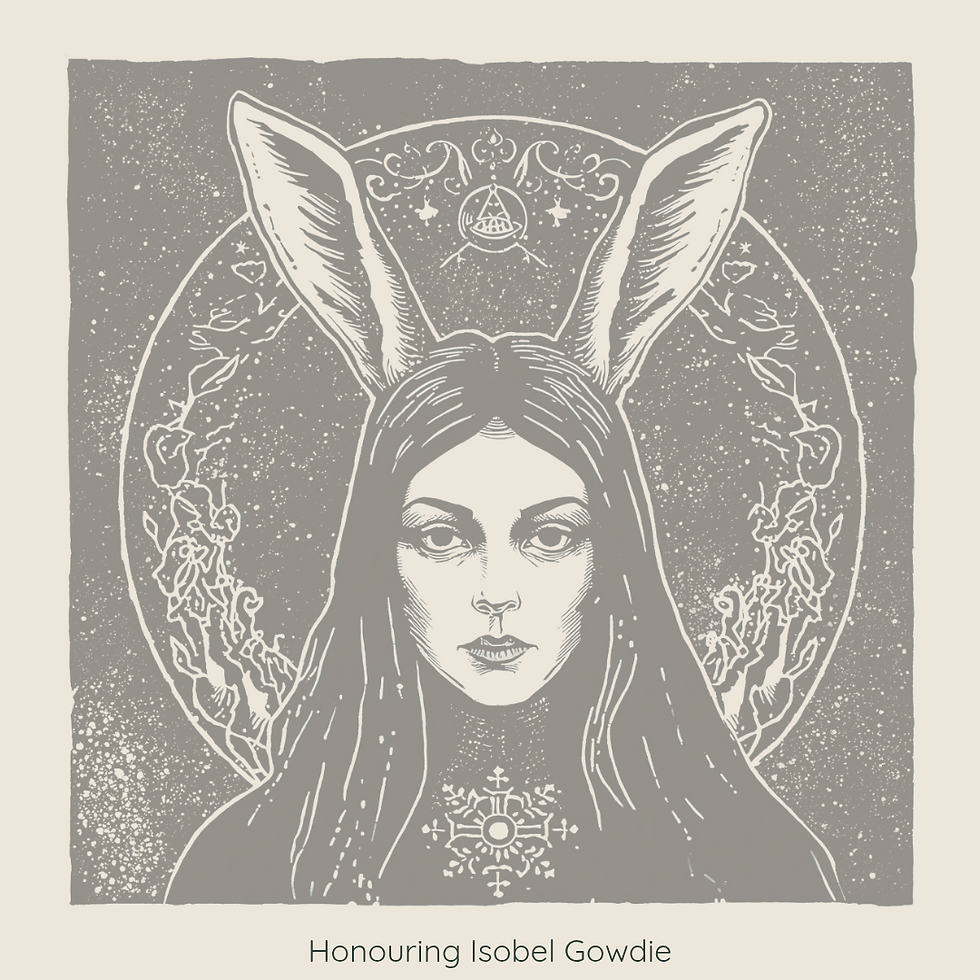
Whatever the truth, her testimony preserved an extraordinary record of folklore.
Without her words, we might know far less about the magical beliefs, fairy traditions & folk spirituality that once shaped daily life in Scotland.
For this reason, Isobel Gowdie occupies a unique place in the history of witchcraft in Britain, not only as an accused witch, but as a keeper of cultural memory.
The Cunning Women & Village Healers of Britain
While dramatic trials capture attention, much of Britain’s magical tradition lived quietly in villages & rural communities.
For centuries, people sought help from individuals known to history as cunning folk, practitioners who combined herbal knowledge, folk charms & practical healing.
Among them were many women.
These cunning women in Britain often served as herbalists, midwives, or healers. They knew which plants eased fever, which remedies soothed coughs & how to support women through childbirth. Their knowledge was typically passed through families or learned through experience rather than formal education.
These traditions were rarely called “witchcraft” by the people practicing them. Instead, they were simply part of folk religion, the blend of local beliefs, seasonal festivals & practical magic that helped people make sense of the world around them.
The spiritual landscape of early Europe was deeply connected to nature. Agricultural cycles shaped celebrations & many festivals honoured seasonal turning points that we still recognise today. Traditions linked to midwinter, spring fertility, harvest & ancestral remembrance were embedded in community life.

Even after the spread of Christianity across Europe, many of these practices continued alongside church traditions. For centuries, folk magic & Christian belief existed side by side. In many communities, they were deeply respected.
As time went on the boundary between respected healer & accused witch could be dangerously thin. Despite this risk, cunning folk formed an essential part of folk magic traditions in Britain. Their work preserved herbal knowledge, seasonal wisdom & spiritual practices that might otherwise have been lost.
Today, many modern witches & herbalists view these historical figures as part of their spiritual lineage.
The Last Woman Imprisoned for Witchcraft
Many people assume that witchcraft accusations ended centuries ago.
Yet one of the most striking chapters in modern British witchcraft history took place during the twentieth century.
In 1944, Scottish medium Helen Duncan was prosecuted under Britain’s centuries old witchcraft legislation.
Duncan worked as a spiritualist medium, holding séances in which she claimed to communicate with the spirits of the deceased. Spiritualism was relatively popular during this period, especially during the world wars when many families sought comfort after loss.
Authorities accused Duncan of fraudulent mediumship and prosecuted her under the Witchcraft Act of 1735.
Her imprisonment made her the last person in Britain convicted under that law.
The case sparked significant public debate. Many critics argued that using witchcraft legislation in the twentieth century demonstrated how outdated and inconsistent the law had become.

Governments across Europe began repealing laws that criminalised witchcraft. In Britain, the final repeal came with the Witchcraft Act 1735, which shifted the focus from punishing alleged witches to prosecuting people who claimed magical powers for fraudulent purposes. In 1951, the Witchcraft Act was repealed and replaced with the Fraudulent Mediums Act.
Duncan’s story stands as a reminder that fear and suspicion surrounding spiritual women persisted far longer than many people realise.
The Rise of Modern Witchcraft and Wicca
While the repeal of witchcraft legislation marked an important legal change, another transformation was quietly unfolding in Britain.
During the mid twentieth century, new forms of modern witchcraft in the UK began to emerge publicly.
One of the most influential figures in shaping these traditions was Doreen Valiente.

Valiente became a central voice in the early development of modern Wicca. Rather than simply practising ritual, she helped craft the spiritual language that would define the tradition.
She rewrote & refined many early ritual texts, shaping invocations & liturgy that blended folklore, poetry & reverence for nature. Her writing helped establish the tone and philosophy of modern Wiccan practice.
For centuries, women had been excluded from authoring religious texts or spiritual doctrine. Valiente’s work quietly challenged that pattern.
Through poetry & ritual language, she contributed to a new understanding of witchcraft, not as superstition or accusation, but as a spiritual path.

Alongside her, other figures helped expand the movement.
Among them was Patricia Crowther, who became one of the early High Priestesses of modern Wicca in Britain. Crowther played a significant role in teaching, initiating practitioners & helping to preserve ritual tradition.
By the mid twentieth century, the word witch was beginning to change meaning.
For the first time in centuries, some individuals were choosing the word deliberately, not as an accusation imposed by others, but as a spiritual identity.
Throughout the late 20th century, other traditions & approaches also emerged. Some practitioners focused on ceremonial ritual, others on folk magic or ancestral traditions. The idea of the solitary witch, someone practicing independently rather than within a coven, also became more common.
Books, workshops & communities began sharing knowledge that had once been hidden or fragmented.
Witchcraft in the Modern World
Today, witchcraft is practiced in many different forms. Some follow structured traditions such as Wicca, while others develop deeply personal paths rooted in folklore, herbal knowledge, seasonal cycles, or meditation.
For many modern practitioners, witchcraft is less about dramatic spells & more about cultivating awareness, intention & connection. Lighting a candle with purpose, observing the phases of the moon, honouring the turning of the seasons, or working with crystals & herbs are all ways people engage with everyday magic.
However, the rise in visibility has also encouraged deeper discussions about history, cultural context & respectful practice. Many contemporary witches are exploring historical sources, folklore & regional traditions to better understand where their practices come from.
Perhaps one of the most powerful aspects of modern witchcraft is the reclamation of the word itself.
For centuries, “witch” was used as a weapon, a label that justified fear, punishment & control. Today, many people choose to adopt the word deliberately, transforming it from an accusation into a declaration of identity.
Reclaiming witchcraft can mean different things to different people. For some, it is a spiritual practice grounded in nature and seasonal rhythms. For others, it is a path of personal empowerment or a way of reconnecting with ancestral traditions.
It can also be a way of acknowledging the past, recognising the suffering caused by witch hunts while refusing to let that history erase the traditions & wisdom that survived.The story of witchcraft is not finished. Like all living traditions, it continues to evolve as new generations explore what it means to practice magic, honour the seasons & connect with the unseen world.
What remains constant is the thread that runs through centuries of folklore & tradition: the human desire to understand the rhythms of nature, work with intention & find meaning in the cycles of life.
From persecution to reclamation, the journey of witchcraft is one of resilience. Practices that were once suppressed have found new life in modern spirituality, reminding us that traditions rarely disappear completely. They transform, adapt & wait for the right moment to re-emerge.
Today, the witch is no longer simply a figure of fear or myth. For many, she, or they, represent a bridge between past and present, tradition & personal practice, history & possibility.
-Bright Blessings
Aimee
Comments